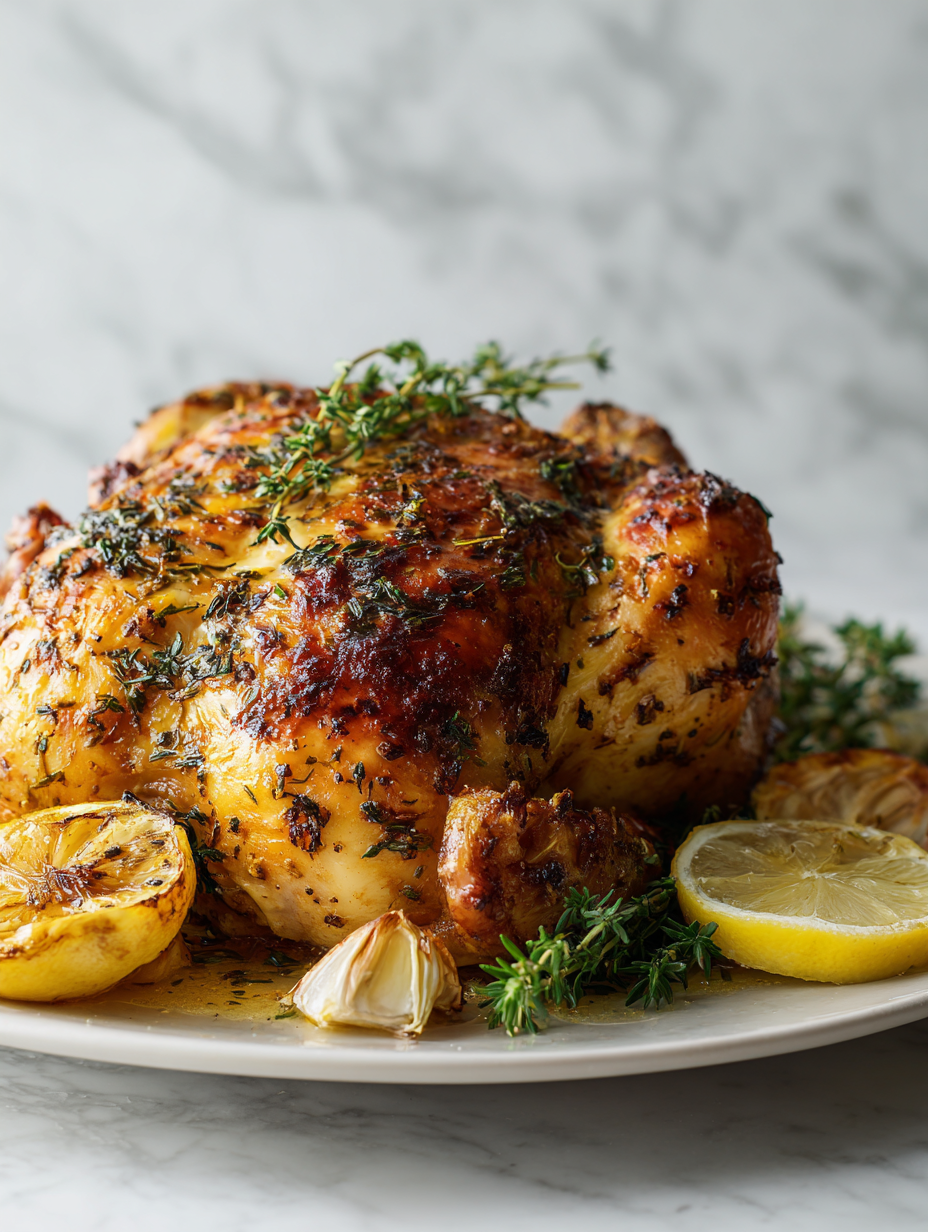
This roast chicken with lemon and herbs is like a little celebration in your oven. The slices of lemon perched on top not only add a bright, tangy aroma but also act as visual cues for that perfect, juicy roast. It’s a dish that feels fancy but is pretty straightforward to pull off on a busy weeknight.
What I love about this recipe is how the lemon’s acidity cuts through the richness of the chicken, balancing every bite. As it roasts, the citrus releases its fragrant oils, mingling with herbs and transforming the kitchen into a lively, fresh-smelling space. It’s a simple way to elevate a humble bird into something memorable, without fuss.
Focusing on how the brightness of lemon slices can serve as both a flavor enhancer and visual cue, I see this roast chicken not just as a meal but as a sensory experience that evolves from the first crackle in the oven to the final burst of citrus aroma at the table.
Lemon’s Bright Touch
- I love how the lemon slices caramelize slightly, adding a hint of sweetness amidst the tang.
- There’s a quiet pride in pulling this together; it feels elevated but still cozy.
- The aroma of herbs and citrus bubbling in the oven always makes the house feel alive.
- Sometimes, I just enjoy the simple act of squeezing fresh lemon over the crispy skin at the table.
- This recipe reminds me of family dinners—loud, warm, and full of bright flavors.
The inspiration behind this dish
- This recipe was born out of a lazy Sunday afternoon when I had a small, almost forgotten lemon sitting in the fridge. Instead of zesting or squeezing, I wondered what would happen if I just placed slices right on the chicken. Turns out, it creates this beautiful, aromatic crust that’s both tangy and slightly sweet.
- Over the years, I’ve tweaked it—adding sprigs of thyme and a splash of white wine—yet that simple lemon-on-top approach stayed my favorite. It’s honest, unpretentious, and makes every dinner feel like an occasion, even if I’m just rustling it up after work.
- heading:
Historical and Cultural Tidbits
- Lemon and herbs have been used together since ancient Greece, symbolizing purity and clarity in culinary traditions.
- Roast chicken with citrus became popular in Mediterranean and Middle Eastern cuisines, where fresh herbs and lemon are staples for brightening rich dishes.
- The practice of placing lemon slices directly on the chicken allows the fruit’s natural acids to tenderize the meat while infusing it with flavor.
Ingredient Breakdown
- Chicken: I prefer a whole bird with skin-on—gives me crispy, flavorful skin that’s hard to beat. Swap for thighs if you want less fuss and faster roasting.
- Lemon: Slices of lemon are my secret to that bright, slightly caramelized flavor. If you’re out, a splash of lemon juice adds a similar tang, just less visual pop.
- Herbs: Fresh thyme and rosemary are my go-tos—they release fragrant oils that lift the whole dish. Dried herbs work in a pinch but lack that fresh, lively aroma.
- Garlic: I like smashing garlic cloves and tucking them under the skin for mellow, roasted depth. Skip if you’re sensitive to garlic’s pungency, or try garlic powder for convenience.
- Olive oil: Drizzle generously before roasting—helps skin crisp and keeps the herbs from burning. Use avocado oil if you want a neutral, high-smoke-point option.
- Salt: I season generously; it’s the key to flavor. Kosher salt gives a nice clean taste, but table salt works if you’re mindful of measurement.
- Pepper: Freshly ground black pepper adds a subtle spice. For a smoky touch, sprinkle on some smoked paprika along with it.
Spotlight on key ingredients
Lemon:
- I love how lemon slices caramelize slightly, adding a hint of sweetness amidst the tang.
- There’s a quiet pride in pulling this together; it feels elevated but still cozy.
- The aroma of herbs and citrus bubbling in the oven always makes the house feel alive.
Herbs (Thyme):
- Fresh thyme: It releases fragrant oils that lift the entire dish, giving it a lively herbal aroma.
- During roasting, thyme leaves become slightly crispy and fragrant, adding depth.
- If you’re out of fresh, dried thyme works but loses that vibrant, fresh aroma.
Notes for ingredient swaps
- Dairy-Free: Swap butter for olive oil or a dairy-free butter substitute. You won’t get that rich, velvety feel, but the chicken stays moist and flavorful.
- Herb Variations: Use fresh oregano or parsley instead of thyme and rosemary. It changes the aroma but keeps the herbal brightness alive.
- Citrus Swap: If lemon isn’t available, lime or orange slices work well. Lime adds a sharper tang, while orange gives a sweeter, more mellow citrus note.
- Garlic Alternatives: Use garlic powder if fresh garlic isn’t handy. It’s less pungent, but still imparts that savory depth.
- Oil Choices: Canola or vegetable oil are neutral options if olive oil isn’t in reach. They won’t add as much flavor but will still crisp the skin nicely.
- Salt Type: Kosher salt is best for seasoning, but if you only have table salt, use a bit less—especially for the skin—to avoid oversalting.
- Pepper Options: Try smoked paprika for a subtle smoky kick or white pepper for a milder, less visible spice.
Equipment & Tools
- Roasting pan with rack: Supports the chicken for even roasting and crisping.
- Kitchen twine: Ties the legs for a tidy, even cook.
- Sharp knife: Carves the chicken smoothly after resting.
- Meat thermometer: Checks internal temperature for perfect doneness.
- Basting brush or spoon: Applies pan juices and oils for crispy skin.
Step-by-step guide to roast chicken
- Preheat your oven to 200°C (390°F). Have a roasting pan ready, preferably with a rack that fits the bird comfortably.
- Pat the chicken dry with paper towels; this helps get crispy skin. Season generously with salt and pepper inside and out.
- Stuff the cavity with a few sprigs of thyme and a halved garlic clove for aromatic depth. Tie the legs with kitchen twine if desired.
- Place the chicken breast-side up on the rack. Tuck lemon slices under the skin on the breasts and around the cavity for bright flavor and visual appeal.
- Drizzle olive oil over the skin, then rub to coat evenly. Sprinkle more salt, pepper, and chopped herbs on top for extra flavor.
- Roast in the oven for about 1 hour and 15 minutes, or until the skin is golden brown and the juices run clear when pierced.
- Baste the chicken with pan juices every 20 minutes to keep the skin crisp and flavorful.
- Check for doneness: the internal temperature should reach 75°C (165°F) at the thickest part of the thigh, and juices should run clear.
- If the skin browns too quickly before the chicken is cooked through, tent loosely with foil and continue roasting.
- Once done, remove from oven and let rest for 10-15 minutes. Resting allows juices to redistribute, keeping the meat moist.
- Carve and serve with the roasted lemon slices and herbs. Squeeze fresh lemon juice over for an added bright hit.
Let the chicken rest uncovered on a cutting board for at least 10 minutes. Carve, then plate with the lemon slices and herbs. Squeeze fresh lemon over the meat for extra brightness.
How to Know It’s Done
- Internal temperature reaches 75°C (165°F).
- Juices run clear when pierced at the joint.
- Skin is golden and crisp, with a slight caramelized edge.
Lemon and Herb Roast Chicken
Ingredients
Equipment
Method
- Preheat your oven to 200°C (390°F). Pat the chicken dry with paper towels to ensure crispy skin, then season generously inside and out with salt and pepper.
- Stuff the cavity with a couple of sprigs of thyme, rosemary, and smashed garlic cloves to infuse aromatic flavors during roasting.
- Tie the chicken legs together with kitchen twine for even cooking and a neat presentation.
- Place the chicken breast-side up on a rack in your roasting pan. Tuck lemon slices under the skin on the breasts and around the cavity for bright flavor and attractive presentation.
- Drizzle the olive oil over the chicken skin, then rub it in to coat evenly; this helps achieve crispy, golden skin.
- Sprinkle additional salt, pepper, and some chopped herbs on top for extra flavor. Place remaining lemon slices on top or around the chicken for visual appeal.
- Roast in the oven for about 1 hour and 15 minutes, or until the skin is golden brown and a meat thermometer inserted into the thickest part reads 75°C (165°F).
- Every 20 minutes, baste the chicken with pan juices using a basting brush or spoon to keep the skin crisp and flavorful.
- Check the internal temperature around the thigh; if done, remove the chicken from the oven and tent loosely with foil.
- Allow the chicken to rest for 10-15 minutes on a cutting board, letting the juices settle back into the meat for maximum moistness.
- Carve the chicken, then serve with the caramelized lemon slices and herbs. Squeeze fresh lemon juice over each serving for an extra burst of brightness and flavor.
Pro Tips for Perfect Roast Chicken
- Start with dry skin: Pat the chicken thoroughly; crispy skin depends on removing moisture before roasting.
- Use lemon slices strategically: Tuck slices under the skin for flavor infusion and caramelization, not just on top.
- Baste for crispness: Spoon pan juices over the skin every 20 minutes to keep it golden and flavorful.
- Check temperature early: Start checking at 1 hour; aim for 75°C (165°F) in the thickest part of the thigh.
- Rest before carving: Let the chicken sit for at least 10 minutes; this keeps juices from spilling out when cut.
- Adjust heat if needed: If skin darkens too fast, tent loosely with foil to prevent burning while interior cooks.
- Season generously: Salt and herbs are your flavor foundation—don’t skimp; taste is all about balance.
Common Roast Chicken Mistakes
- FORGOT to dry the chicken thoroughly before seasoning.
- DUMPED lemon slices into the pan without placing under the skin.
- OVER-TORCHED the skin, causing it to burn before chicken cooked through.
- FAILED to check internal temperature, risking undercooked poultry.
Quick Fixes and Pantry Swaps
- When chicken skin browns too quickly, shield with foil for even cooking.
- If lemon slices seem dull, splash with a little lemon juice before roasting for extra zing.
- Splash a bit of broth or water into the pan if the drippings burn, to prevent bitterness.
- Patch over burnt skin with a fresh lemon slice or herb sprig to mask charring aroma.
- Shield undercooked chicken with foil and roast a few more minutes for perfect doneness.
Prep, Store, and Reheat Tips
- You can prep the chicken by seasoning it and slicing the lemon a day ahead; keep covered in the fridge for up to 24 hours for a more flavorful roast.
- Store leftover cooked chicken in an airtight container in the fridge for up to 3 days; the lemon slices may lose some brightness but still add flavor when reheated.
- Reheat gently in the oven at 150°C (300°F) uncovered for about 15-20 minutes until warm; expect the skin to soften slightly but retain its aroma.
- The flavors deepen overnight as the herbs and citrus infuse the meat, making leftovers even better the next day.
Top questions about Roast Chicken with Lemon and Herbs
1. How do I know when the chicken is cooked?
Look for an internal temperature of 75°C (165°F) in the thigh, and juices should run clear when pierced.
2. Can I use dried herbs instead of fresh?
Yes, you can substitute dried herbs, but fresh herbs give a brighter, more vibrant flavor and aroma.
3. How long should I roast the chicken?
Roast the chicken at 200°C (390°F) for about 1 hour and 15 minutes, but always check internal temperature for doneness.
4. Should I baste the chicken while roasting?
Baste every 20 minutes with pan juices to keep the skin crispy and flavorful.
5. Why do I need to rest the chicken after roasting?
Yes, resting for 10-15 minutes allows the juices to redistribute, resulting in a moist, tender chicken.
6. How should I add lemon to the chicken?
Use lemon slices placed under the skin and around the cavity for maximum citrus infusion and visual appeal.
7. What if the skin burns before the chicken is done?
If the skin darkens too quickly, tent loosely with foil to prevent burning while the interior cooks through.
8. What’s the best way to check if the chicken is done?
Use a meat thermometer to accurately check internal temperature, avoiding under or overcooking.
9. How do I store and reheat leftovers?
Leftovers can be stored in the fridge for up to 3 days; reheat in a low oven until warmed through and fragrant.
10. How can I brighten the lemon flavor if it’s muted?
If the lemon slices seem dull, splash with a little lemon juice before roasting for extra brightness and zing.
This roast chicken with lemon and herbs is a simple reminder that bright, fresh flavors can turn a humble meal into something memorable. The aroma alone—citrus and herbs mingling—makes the house feel alive in a way that’s hard to replicate.
When you carve into that crispy skin and see the juicy, perfectly cooked meat inside, it’s a small victory. It’s honest food that comforts and excites, a dish that feels just right for sharing or a quiet night in.

Hi, I’m Emily Carter, the founder of Absolute Chaos Mode. Born and raised in Portland, Oregon, I grew up in a household where dinner was equal parts delicious and unpredictable