
Making mushroom risotto is like hitting a pause button in the middle of a busy day. It’s all about the rhythmic stirring, feeling the creamy texture develop gradually, and getting lost in that tactile dance with each ladle of broth. It’s unexpectedly meditative, a slow, deliberate act that grounds you right there at the stove.
There’s something grounding about the process—the way the earthy smell of mushrooms mingles with the toasty aroma of sautéed shallots and garlic. It’s a dish that asks for patience, but rewards you with a velvety bite that’s rich and satisfying, even when the outside world feels chaotic. It’s the kind of cooking that turns a simple meal into a mindful ritual.
Focusing on the tactile joy of stirring mushroom risotto, emphasizing the meditative process as a form of culinary mindfulness that turns cooking into a calming ritual amidst everyday chaos.
The tactile joy of stirring
- Stirring this risotto is my quiet moment in a hectic day, feeling the creaminess build with each ladle.
- The earthy aroma of mushrooms always takes me back to lazy Sunday mornings at my grandma’s kitchen.
- There’s a small thrill in getting the perfect al dente bite, a delicate balance of patience and instinct.
- Cooking this dish reminds me that simple ingredients, treated gently, can create something deeply comforting.
- I love how the texture transforms from grainy to velvety, like a little culinary magic in my own pot.
The spark behind this dish
Making mushroom risotto is a bit like a small daily meditation for me. I started craving it during a chilly autumn when I wanted something earthy and warm that wouldn’t take hours to make but still felt special. The process of slowly stirring, watching the rice absorb the broth and develop that creamy, slightly chewy texture, became a grounding ritual. It’s not just about the dish — it’s about creating a little moment of calm amid chaos.
Trivia and origins of mushroom risotto
- Mushroom risotto has roots in Northern Italy, especially in Lombardy, where rice paddies thrive around Milan.
- The dish likely evolved as a way to elevate humble ingredients like rice and wild mushrooms into something special.
- Traditionally, it’s made with Carnaroli or Arborio rice, varieties prized for their creamy texture and ability to absorb flavors.
- In Italy, risotto is more than comfort food—it’s a showcase of seasonal ingredients, with mushrooms often taking center stage in fall.
- The technique of slowly stirring and gradually adding broth was originally a way to control the rice’s cooking and texture.
Ingredient breakdown
- Mushrooms: I prefer earthy cremini for their meaty texture and deep flavor, but shiitake add a smoky, umami punch that really elevates the dish. Try sautéing them until they’re golden and fragrant.
- Arborio Rice: This starchy rice is the backbone—its ability to absorb broth slowly creates that luscious, velvety texture. If you don’t have Arborio, carnaroli works equally well, just watch the cook time closely.
- Vegetable Broth: I keep mine warm and seasoned well—no one likes a cold, bland risotto. Use homemade if you can; it’s richer and more flavorful. Always ladle in hot broth to keep the simmer gentle.
- Shallots: Finely chopped, they melt into the base, adding sweet, subtle onion notes. I sauté them until translucent without letting them brown too much, or they’ll turn bitter.
- Parmesan: Freshly grated, it melts into the rice, binding everything together with a salty, nutty richness. Skip pre-grated; it’s not the same—fresh makes a real difference. Add it off the heat for maximum creaminess.
- Butter: I swirl in a knob at the end for that glossy, luscious finish. It’s what makes the risotto feel indulgent. Use good quality, unsalted butter for the best flavor.
- Olive Oil: A splash during the initial sauté adds a fruity note that complements the earthiness of the mushrooms. Use a good extra virgin; it’s the base of your flavor foundation.
Spotlight on key ingredients
Mushrooms:
- I prefer earthy cremini for their meaty texture and deep flavor, but shiitake add a smoky, umami punch that really elevates the dish. Try sautéing them until they’re golden and fragrant.
- Arborio Rice: This starchy rice is the backbone—its ability to absorb broth slowly creates that luscious, velvety texture. If you don’t have Arborio, carnaroli works equally well, just watch the cook time closely.
Parmesan:
- Freshly grated, it melts into the rice, binding everything together with a salty, nutty richness. Skip pre-grated; it’s not the same—fresh makes a real difference. Add it off the heat for maximum creaminess.
- Butter: I swirl in a knob at the end for that glossy, luscious finish. It’s what makes the risotto feel indulgent. Use good quality, unsalted butter for the best flavor.
Notes for ingredient swaps
- Dairy-Free: Swap butter and Parmesan for a splash of coconut cream and nutritional yeast. It adds creaminess without dairy, but expect a slightly sweeter, nuttier flavor.
- Vegetarian: Use vegetable broth instead of chicken, and ensure any added ingredients are plant-based. The flavor stays earthy and rich, even without meat-based stock.
- Gluten-Free: Arborio rice is naturally gluten-free, but double-check broth labels. No change needed, just watch for gluten in pre-made stocks.
- Low-Sodium: Choose reduced-sodium broth and skip added salt until tasting. The dish will have a gentler, more nuanced saltiness, letting the mushroom umami shine.
- Vegan: Replace Parmesan with a vegan cheese or a sprinkle of toasted pine nuts. The texture remains creamy but loses that cheesy sharpness, so adjust seasoning accordingly.
- Extra Umami: Add a splash of soy sauce or mushroom powder during cooking. It boosts the savory depth without overpowering the delicate mushroom flavor.
- Wild Mushrooms: Mix in dried porcini rehydrated in warm water, then chop finely. They impart a smoky, earthy aroma that transforms the dish, but use sparingly to avoid overpowering.
Equipment & Tools
- Large heavy-bottomed pan: Provides even heat for slow cooking and stirring.
- Wooden spoon: For gentle stirring without damaging the rice.
- Ladle: To add hot broth gradually and control liquid addition.
- Saucepan: To keep broth warm throughout the process.
Step-by-step guide to mushroom risotto
- Gather your equipment: a large heavy-bottomed pan, a wooden spoon, and a ladle. Warm the vegetable broth in a separate pot over low heat, keeping it just below simmering point (around 85°C/185°F).
- Clean and slice about 200g of mixed mushrooms (cremini and shiitake work well). In the pan, heat 1 tablespoon of olive oil over medium heat (around 160°C/320°F). Sauté the mushrooms until golden and fragrant, about 5-7 minutes. Set aside.
- Finely chop 1 small shallot and a clove of garlic. In the same pan, add a little more oil if needed. Low simmer the shallots and garlic for 2-3 minutes until translucent but not browned, stirring frequently.
- Add 1 cup (200g) Arborio rice to the pan. Stir for about 2 minutes until the rice is well coated and slightly translucent at the edges. You should smell a toasty aroma.
- Begin ladling in the warm broth, about ½ cup at a time. Stir constantly, allowing the rice to absorb the liquid slowly. Keep the heat at medium-low (around 130°C/265°F). After each addition, wait until most of the liquid is absorbed before adding more. This process takes about 20-25 minutes.
- Every 5 minutes, taste the rice. It should be tender but still have a slight bite (al dente). The risotto should be creamy, not soupy or dry. If you see the rice sticking to the bottom, stir more vigorously or reduce heat slightly.
- When the rice is just about done, stir in the sautéed mushrooms. Cook for another 2 minutes to meld flavors. Turn off heat and stir in 2 tablespoons of butter and ¼ cup freshly grated Parmesan cheese. Cover and let rest for 2 minutes.
- Finish with a final stir, adjust seasoning with salt and pepper, and serve immediately. Garnish with extra Parmesan and a drizzle of good olive oil if desired.
Let the risotto sit off heat for 2 minutes, uncovered, to settle. Stir in butter and cheese just before serving for a glossy, rich finish. Plate immediately for best texture and flavor.
How to Know It’s Done
- Mushrooms are golden and fragrant before mixing in rice.
- Rice is tender yet retains a slight bite (al dente).
- Risotto is creamy and coats the back of a spoon without being runny.
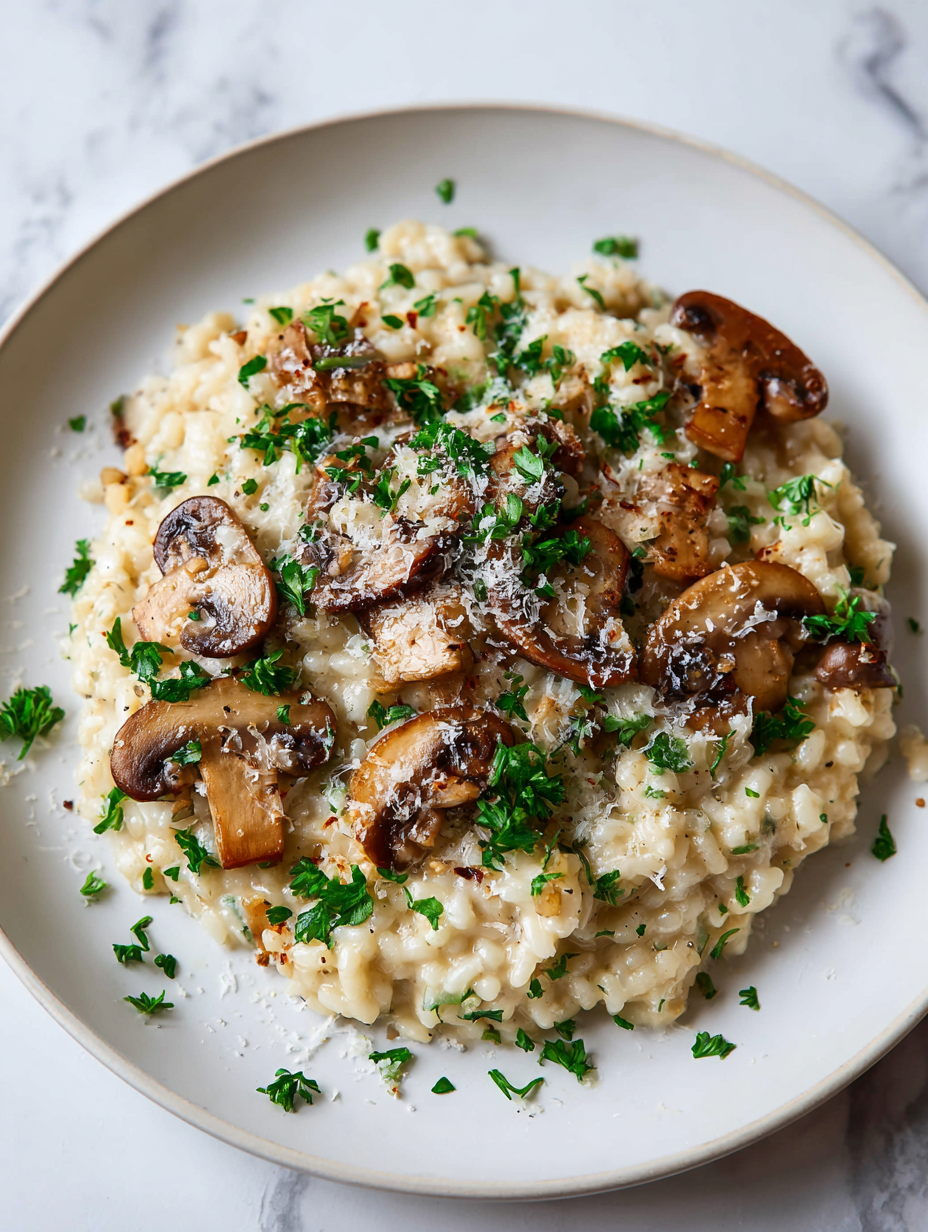
Creamy Mushroom Risotto
Ingredients
Equipment
Method
- Warm the vegetable broth in a saucepan over low heat, keeping it just below simmering.
- In your large pan, heat the olive oil over medium heat and sauté the sliced mushrooms until they turn golden and fragrant, about 5-7 minutes. Set aside.
- In the same pan, add a touch more oil if needed, then gently cook the finely chopped shallot and minced garlic over low heat until translucent, about 2-3 minutes, stirring often.
- Stir the Arborio rice into the pan, toasting it for about 2 minutes until it becomes slightly translucent and releases a toasty aroma.
- Begin ladling in the warm broth, about ½ cup at a time, stirring constantly and waiting until most of the liquid is absorbed before adding more. Maintain a gentle simmer and continue this process for about 20-25 minutes, until the rice is tender but still has a slight bite.
- When the rice is just tender, gently fold in the sautéed mushrooms. Cook for another 2 minutes to meld the flavors.
- Turn off the heat and stir in the butter and freshly grated Parmesan cheese until the risotto becomes glossy and creamy. Cover the pan and let rest for 2 minutes.
- Give the risotto a final stir, taste, and adjust seasoning if needed. Serve immediately, garnished with extra Parmesan if desired.
Pro tips for perfect risotto
- Bolded tip: Keep broth warm and ladle gradually. Cold liquid shocks the rice, slowing absorption and ruining texture.
- Bolded tip: Stir constantly when adding broth. This releases rice starch, creating that creamy, velvety consistency.
- Bolded tip: Sauté mushrooms until deeply golden. This intensifies their earthy flavor and prevents soggy, rubbery bits.
- Bolded tip: Toast rice briefly before adding broth. It enhances nuttiness and helps develop a richer flavor.
- Bolded tip: Finish with butter and Parmesan off heat. This preserves their delicate flavor and ensures a glossy, luscious risotto.
- Bolded tip: Use a wide pan for even heat distribution. It helps control cooking and avoids sticking or uneven texture.
- Bolded tip: Taste as you go—rice should be tender but retain a slight bite. Overcooking turns it mushy, so be attentive.
Common mistakes and how to fix them
- FORGOT to adjust heat → risk burning or undercooking, fix with lower heat and more stirring.
- DUMPED broth too quickly → make it a slow, steady ladle to develop creaminess.
- OVER-TORCHED mushrooms → sauté until golden, not charred, for earthy flavor.
- MISSED resting time → let risotto sit 2 minutes off heat to settle and enhance texture.
Quick fixes and pantry swaps
- When broth cools, splash a bit of hot water to revive the simmer.
- If the risotto is too thick, stir in a splash of warm broth to loosen it.
- Splash a little lemon juice when mushrooms release too much moisture and get soggy.
- Patch over overcooked rice with a bit more broth and stir vigorously for creaminess.
- Shield delicate mushrooms from overcooking by adding them at the very end, just warming through.
Prep, store, and reheat tips
- Prep the mushroom stock and slice mushrooms a day ahead; store in airtight containers in the fridge for up to 24 hours. The earthy aroma will be more pronounced when freshly sliced.
- Cook the risotto until just tender, then cool quickly and refrigerate in an airtight container for up to 2 days. Reheat gently on the stove with a splash of broth, stirring until creamy and hot through.
- Grate Parmesan and prepare shallots in advance; keep separately in the fridge for up to 2 days. Freshly grated cheese melts better, giving the risotto a richer flavor after reheating.
- Risotto flavors deepen overnight, especially if stored with some of the sautéed mushrooms. Expect a slightly more intense earthy aroma, but the texture may firm up—stir in a splash of hot broth when reheating.
- Reheat in a pan over low heat, stirring constantly until the rice is steaming and creamy—watch for a slight stickiness or dryness, and add more broth as needed. The texture should be velvety, with a warm, inviting aroma of mushrooms and Parmesan.
Top questions about mushroom risotto
1. What mushrooms work best for risotto?
Use a variety like cremini or shiitake for a rich, earthy flavor. They should be firm and not slimy before cooking.
2. Why is stirring important in risotto?
Stir constantly when adding broth to release rice starch, creating that signature creamy texture. Don’t rush the process.
3. How do I know when the risotto is done?
Cook the rice until tender but still slightly chewy, about 20-25 minutes. It shouldn’t be mushy or crunchy.
4. Can I add cold broth to risotto?
Use warm broth ladled gradually; cold broth shocks the rice and hampers creaminess. Keep it simmering at all times.
5. When should I add cheese and butter?
Finish with butter and Parmesan off heat to keep the risotto glossy and flavorful. Stir vigorously for best results.
6. How do I reheat leftover risotto?
Reheat gently in a pan with a splash of broth, stirring until hot and creamy. Avoid microwaving to preserve texture.
7. How can I make risotto vegan?
Substitute coconut cream and nutritional yeast for a vegan version. Expect a slightly sweeter, nuttier flavor.
8. Can I use different rice types?
Use Arborio or Carnaroli rice. If unavailable, short-grain rice like sushi rice can work, but cooking times may vary.
9. Should I salt the broth or the risotto?
Skip added salt if using low-sodium broth. Taste and adjust seasoning at the end for best flavor balance.
10. Can I add lemon to risotto?
Adding a splash of lemon juice at the end brightens earthy flavors and balances richness with a fresh note.
Cooking this risotto is a reminder that slow, mindful stirring can turn humble ingredients into something deeply satisfying. It’s a dish that rewards patience and a gentle touch, especially when the earthy aroma of mushrooms fills the kitchen.
In a world that moves fast, this simple process offers a quiet moment of focus. Sharing a bowl of mushroom risotto feels like a small act of kindness—rich, comforting, and perfectly imperfect.

Hi, I’m Emily Carter, the founder of Absolute Chaos Mode. Born and raised in Portland, Oregon, I grew up in a household where dinner was equal parts delicious and unpredictable