
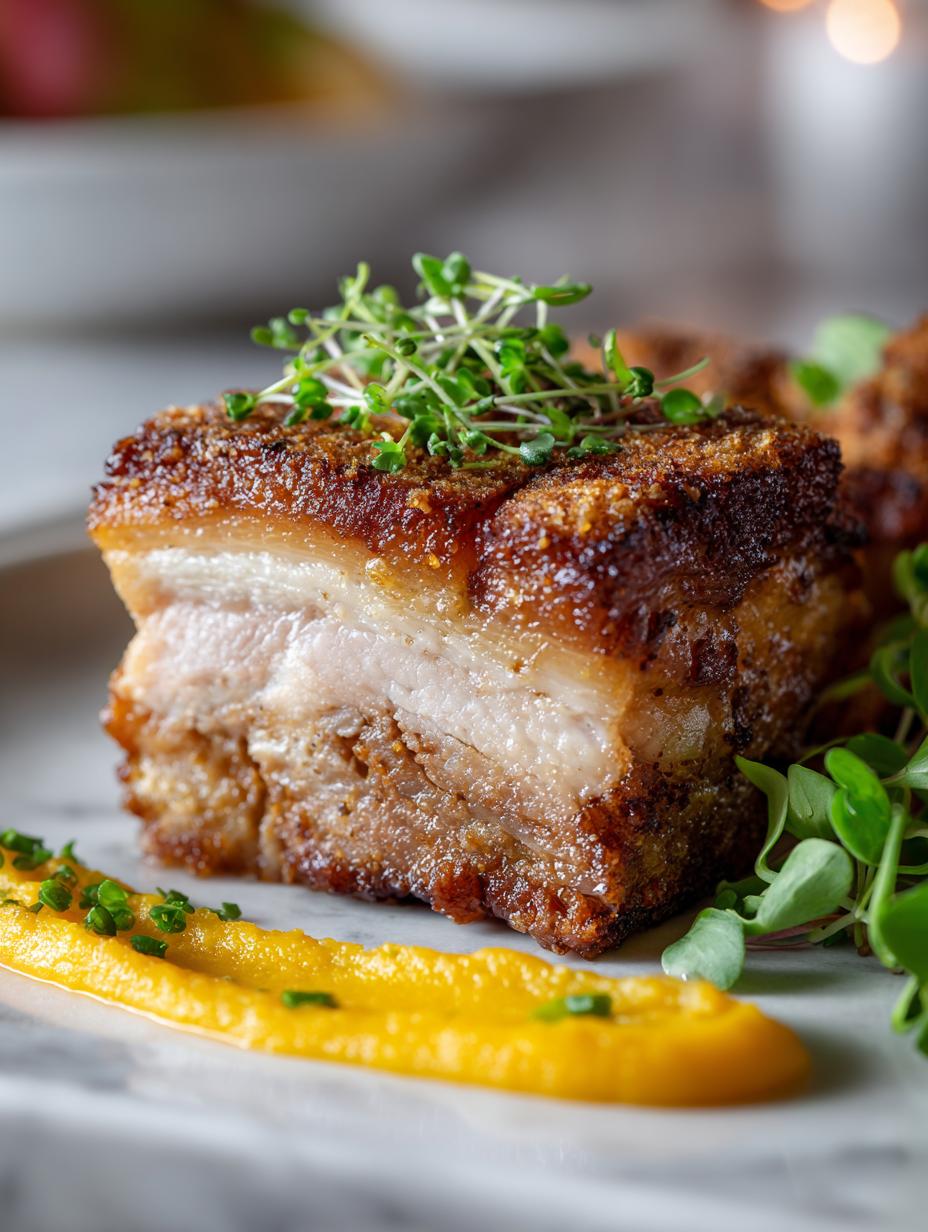
This dish is all about that surprising balance—crackly, golden pork belly paired with a tangy, smooth apple puree. I love how the richness of the meat plays off the bright, tart fruit, making every bite feel both indulgent and fresh. It’s a bit of a celebration of contrasting textures and flavors, simple but unexpected.
I first stumbled on this combo during a quiet Sunday roast, where I was craving something comforting but with a twist. The slow-roasted pork belly gets a crackly crust that’s almost addictive, while the apple puree adds a lively zing that cuts through the fat beautifully. It’s honestly a dish that feels like a cozy discovery, made for sharing but just as good on a quiet night alone.
This recipe explores the unexpected harmony between the rich, unctuous pork belly and the bright, tart apple puree, inspired by nostalgic childhood flavors but elevated through slow-roasting and a hint of smoky spice. It’s about transforming humble ingredients into a celebration of contrast—crackly skin, tender meat, and a vibrant fruit compote that balances richness with a refreshing zing.
Rediscovering Childhood Flavors
- Cooking pork belly always feels like a small rebellion—crackling skin, fat rendering, chaos in the oven—and I love every minute of it.
- That first bite of apple puree, bright and tart, always surprises me after the richness of the pork—the perfect balance that took me years to master.
- There’s a nostalgic comfort in slow-roasting pork belly that reminds me of family Sunday dinners, but elevating it with fresh apples feels like a new tradition.
- I get a thrill seeing the crispy crackle form—each time, I think, ‘This is worth every sticky, smoky moment,’ and I never get tired of it.
- Sharing this dish feels like sharing a secret—simple ingredients, but the way they come together makes me proud every time.
Rediscovering Childhood Flavors
This dish came about from a spontaneous craving for comfort that also felt special. I was thinking about how pork belly’s crispy, fatty exterior pairs so well with the sharpness of apples, something I grew up loving in pies and sauces. One day, I decided to combine those ideas—slow-roasting the pork for that irresistible crackle, then balancing it with a fresh, vibrant apple puree. It’s become a little ritual in my kitchen to perfect that contrast, and sharing it always feels like a small celebration of simple, honest flavors.
Historical & Cultural Notes
- Pork belly has been a prized cut in many Asian cuisines for centuries, especially in Chinese and Filipino dishes where slow braising and roasting are traditional.
- The combination of pork and apples dates back to medieval Europe, where apples were used to cut through the richness of fatty meats in hearty stews and roasts.
- In French cuisine, similar dishes like ‘poitrine de porc’ often feature apple sauces or purees to balance the meat’s unctuousness, highlighting a long-standing flavor pairing.
- Modern pork belly recipes gained popularity in the West during the recent resurgence of slow-roasting techniques, celebrating texture and flavor contrast in home kitchens.
Key ingredients and tips
- Pork belly: I love that rich, fatty marbling—look for a piece with a good layer of skin; it crackles beautifully when cooked. Swap for pork shoulder if you want less fat, but you’ll lose that crispiness.
- Apple: Bright, tart, and juicy—it’s the star of the puree. Use firm apples like Granny Smith for tang, or try Fuji for a sweeter, softer puree. The contrast is what makes this dish sing.
- Salt: It’s the secret to unlocking pork’s richness. Don’t skimp—salting the skin ahead helps render that perfect crackle, and seasoning the meat deeply ensures flavor all the way through.
- Sugar: Just a touch in the apple puree heightens the fruit’s natural brightness and balances the tartness. Skip it if you prefer a more savory profile, but it’s a quiet boost.
- Herbs and spices (like thyme or cinnamon): I keep it simple, adding just a hint of herbs or a pinch of cinnamon in the puree for warmth. Feel free to experiment—just a little can elevate the dish without overpowering.
- Vinegar: A splash of apple cider vinegar brightens the puree’s tartness and cuts through the fat. Use lemon juice for a citrusy twist, but don’t skip the acidity—it’s crucial.
- Butter or oil: I finish the puree with a pat of butter for richness and silkiness. If dairy’s off-limits, a drizzle of good olive oil works, but the butter makes it luxuriously smooth.
Spotlight on Key Ingredients
Pork Belly:
- I love its marbled fat and crispy skin—look for a piece with a good layer of skin for crackle; swap for pork shoulder if you want less fat, but you’ll lose that irresistible crispiness.
- Apple: Bright, tart, and juicy—using firm apples like Granny Smith keeps the puree lively and vibrant. Substitute with Fuji or Honeycrisp for a sweeter, softer touch that still holds its shape well.
Apple:
- Firm and tart apples like Granny Smith are key for a lively puree. Use softer apples for a milder, sweeter flavor—adjust sugar accordingly.
- Salt: It’s the magic that makes the skin crackle and the meat flavorful. Coarse sea salt is best for crisping, but kosher salt works fine if you prefer a milder seasoning.
Notes for ingredient swaps
- Pork Belly: Look for a piece with a good layer of skin and marbling. Swap for pork shoulder if you prefer less fat, but expect less crackle.
- Apple: Granny Smith apples give a bright, tart flavor; Fuji or Honeycrisp add sweetness. Use firm apples to avoid a watery puree.
- Salt: Use coarse sea salt for better crackling. Kosher salt works well for seasoning the meat evenly.
- Sugar: Honey or maple syrup can substitute; they add sweetness and depth but alter the flavor profile slightly.
- Vinegar: Apple cider vinegar brightens the puree; lemon juice offers a fresh citrus note. Balsamic adds sweetness and complexity.
- Butter or oil: Butter makes the puree rich and silky; olive oil is a good dairy-free alternative but less luxurious.
- Herbs & spices: Fresh thyme or cinnamon can replace dried herbs or ground spices, adding warmth and aroma.
Equipment & Tools
- Oven: To roast the pork belly evenly.
- Wire rack: Supports the pork for even heat circulation and crisping.
- Sharp knife: To score the skin without cutting into the meat.
- Saucepan: Cook and mash the apple puree.
- Meat probe thermometer: Check internal temperature for doneness.
- Broiler or kitchen torch: Crisp the skin if needed.
- Serving platter: Present the finished dish attractively.
Step-by-step guide to pork belly with apple puree
- Preheat your oven to 150°C (300°F). Pat the pork belly dry with paper towels. Score the skin in a crosshatch pattern, being careful not to cut into the meat. Rub the skin generously with salt—this helps crackle—and season the meat side with salt, pepper, and herbs if using. Let sit for 15 minutes to absorb.
- Place the pork belly on a wire rack over a baking sheet, skin side up. Roast in the oven for 2 to 2.5 hours, until the meat is tender but the skin isn’t quite crispy yet. Check periodically, and if the skin isn’t crackling enough towards the end, increase oven temp to 220°C (430°F) for 10-15 minutes, watching closely.
- While the pork is roasting, peel and core the apples. Chop into chunks. In a saucepan, melt a little butter or add a splash of water, then cook apples over medium heat for about 10 minutes, until soft. Mash or blend until smooth. Stir in sugar, vinegar, and a pinch of cinnamon or herbs. Keep warm.
- Remove the pork from the oven. Increase oven temperature to 220°C (430°F). Pat the skin dry again if needed. Return to oven and roast for another 15-20 minutes, or until the skin is golden and crackly. You should hear a satisfying crackle when you tap the skin.
- Check the pork: the internal temperature should be around 65°C (150°F). The skin should be deep golden with bubbles and crisp edges. If the skin isn’t crackling, use a blowtorch or broiler for a few seconds to crisp it up. Remove from oven and let rest for 10 minutes, tented loosely with foil.
- Slice the pork belly carefully, keeping the crackled skin intact. Plate with a generous spoonful of warm apple puree on the side. Drizzle the meat with any resting juices. Finish with a sprinkle of flaky salt if desired.
- Serve immediately, ensuring the crackling remains crispy and the apple puree stays vibrant and bright. The contrast of textures and flavors should be at their peak—crisp skin, tender meat, tangy-sweet apples.
Let the pork rest for 10 minutes, tented loosely with foil. Slice carefully, keeping the crackle intact. Serve with warm apple puree, topping with flaky salt if desired. Ensure the skin remains crisp and presentation is appealing.
How to Know It’s Done
- Crackling: deep golden, bubbling, and crisp when tapped.
- Meat: probe temperature around 65°C (150°F), tender and juicy.
- Appearance: skin crackled evenly; apple puree bright and smooth.
Pork Belly with Apple Puree
Ingredients
Equipment
Method
- Preheat your oven to 150°C (300°F). Pat the pork belly dry with paper towels, then score the skin in a crosshatch pattern without cutting into the meat. Rub the skin generously with coarse sea salt, ensuring it gets into the scores, and season the meat side with salt, pepper, and herbs if desired. Let it sit for 15 minutes to absorb.
- Place the pork belly on a wire rack over a baking sheet, skin side up. Roast in the oven for about 2 to 2.5 hours until the meat is tender but the skin isn’t yet crispy. This slow cooking helps render the fat and tenderize the meat.
- Meanwhile, peel and core the apples, then chop them into chunks. In a saucepan, melt a tablespoon of butter over medium heat, then add the apples. Cook for about 10 minutes until soft and fragrant, stirring occasionally. Mash or blend until smooth, then stir in sugar, apple cider vinegar, and a pinch of cinnamon for warmth. Keep warm.
- Once the pork has cooked for the initial time, increase the oven temperature to 220°C (430°F). Pat the skin dry again if needed. Return the pork to the oven and roast for an additional 15-20 minutes, or until the skin bubbles, turns deep golden, and becomes crackly. Keep an eye on it to prevent burning.
- Check the internal temperature with a meat probe; it should read around 65°C (150°F). When the skin crackles and bubbles, remove the pork from the oven and let it rest loosely tented with foil for 10 minutes, allowing the juices to redistribute.
- Crisp the skin further if necessary by briefly broiling or using a kitchen torch until crackly and golden. Slice the pork belly carefully, keeping the crackled skin intact.
- Serve slices of pork belly with a generous spoonful of warm apple puree on the side. Drizzle any resting juices over the meat and finish with a sprinkle of flaky salt if desired. The dish should showcase a crispy, crackling skin, tender meat, and bright, smooth apple puree.
Notes
Pro tips for perfect pork belly
- Crisp skin: Ensure the skin is thoroughly dried and scored well before salting to achieve maximum crackle.
- Temperature check: Use a meat probe to confirm the pork reaches about 65°C (150°F) for tender, juicy meat.
- Oven technique: Finish the crackling under high heat or broiler for a few minutes, listening for that satisfying crack.
- Apple puree: Simmer apples slowly until soft, then mash or blend for a smooth, vibrant contrast to the pork.
- Resting: Let the pork rest for 10 minutes after roasting; this keeps the juices locked in and the meat tender.
- Salt application: Salt the skin liberally before roasting and again after resting for optimal crispness and flavor.
- Serving: Slice carefully, keeping the crackled skin intact, and serve immediately to preserve texture.
Common mistakes and how to fix them
- FORGOT to dry skin: leads to soggy crackling—always pat dry thoroughly before roasting.
- DUMPED salt: skimping on salt prevents proper crackle—be generous, especially on the skin.
- OVER-TORCHED skin: burns easily—keep a close eye and reduce heat if skin darkens too quickly.
- MISSED resting time: cutting into hot pork causes juices to run out—rest for at least 10 minutes to stay moist.
Fast fixes for perfect pork crackle
- When skin isn’t crackling, splash a little more salt and crank up the oven temperature.
- If crackle fades, rescue with 5 seconds under the broiler or a kitchen torch for crispness.
- DUMPED salt on skin? Pat it dry and re-salt before roasting for better crackle.
- Over-torched skin? Reduce oven heat immediately and shield with foil to prevent burning.
- When apple puree is dull, add a splash of lemon juice or vinegar to brighten flavors.
Prep, store, and reheat tips
- You can prepare the apple puree a day in advance; store in an airtight container in the fridge for up to 2 days. Reheat gently, stirring until warm and smooth—look for a bright, inviting aroma.
- Roasting the pork belly can be done a few hours ahead; keep it covered loosely with foil in a warm place. Reheat at 150°C (300°F) until warmed through, its crackle and tenderness restored.
- The pork skin can be crisped up again in the oven just before serving—about 10 minutes at 220°C (430°F)—until it crackles and shimmers again under the broiler.
- Leftovers should be stored in airtight containers in the fridge for up to 3 days. Reheat the pork gently in a low oven, and refresh the apple puree on the stove—bright, tart, and silky on the palate.
Top questions about Pork Belly with Apple Puree
1. Can I use a different cut of pork?
Look for a piece with a good layer of skin and marbling; swap for pork shoulder if you want less fat, but expect less crackle.
2. What kind of apples should I choose?
Firm apples like Granny Smith give a bright, tart flavor; softer apples like Fuji work well for a sweeter puree.
3. How much salt should I use?
Use coarse sea salt or kosher salt for best crackling effect; sprinkle generously on the skin and season the meat deeply.
4. Can I substitute the sugar in the puree?
Honey or maple syrup can substitute for sugar, adding sweetness and depth but slightly changing the flavor profile.
5. What’s a good substitute for vinegar?
A splash of apple cider vinegar brightens the puree’s tartness; lemon juice offers a citrusy note, but don’t skip acidity.
6. Can I use oil instead of butter?
Butter makes the puree rich and silky; olive oil can work if dairy-free, but it won’t be quite as luxurious.
7. What herbs or spices work well here?
Adding herbs like thyme or a pinch of cinnamon in the puree adds warmth and aroma; keep it subtle to complement the dish.
8. How do I get crispy crackling?
Ensure the skin is thoroughly dried and scored well before salting to get maximum crackle. Pat dry before roasting.
9. How long should I rest the pork?
Rest the pork for at least 10 minutes after roasting to let juices redistribute; this keeps the meat tender and moist.
10. When is the best time to serve?
Serve immediately after slicing to keep the crackle crisp and the apple puree vibrant and bright.
This dish, with its crackly pork skin and bright apple puree, feels like a small, deliberate celebration of contrasts. It’s a reminder that simple ingredients, treated with care, can surprise us in the best way. Cooking it slowly, paying attention to those crispy moments, makes every bite feel worth the effort.
Right now, when comfort food feels especially needed but still wants a touch of brightness, this pairing hits just right. It’s honest, unpolished, and full of textures that keep you coming back for more—an easy way to elevate a humble weeknight into something memorable.

Hi, I’m Emily Carter, the founder of Absolute Chaos Mode. Born and raised in Portland, Oregon, I grew up in a household where dinner was equal parts delicious and unpredictable