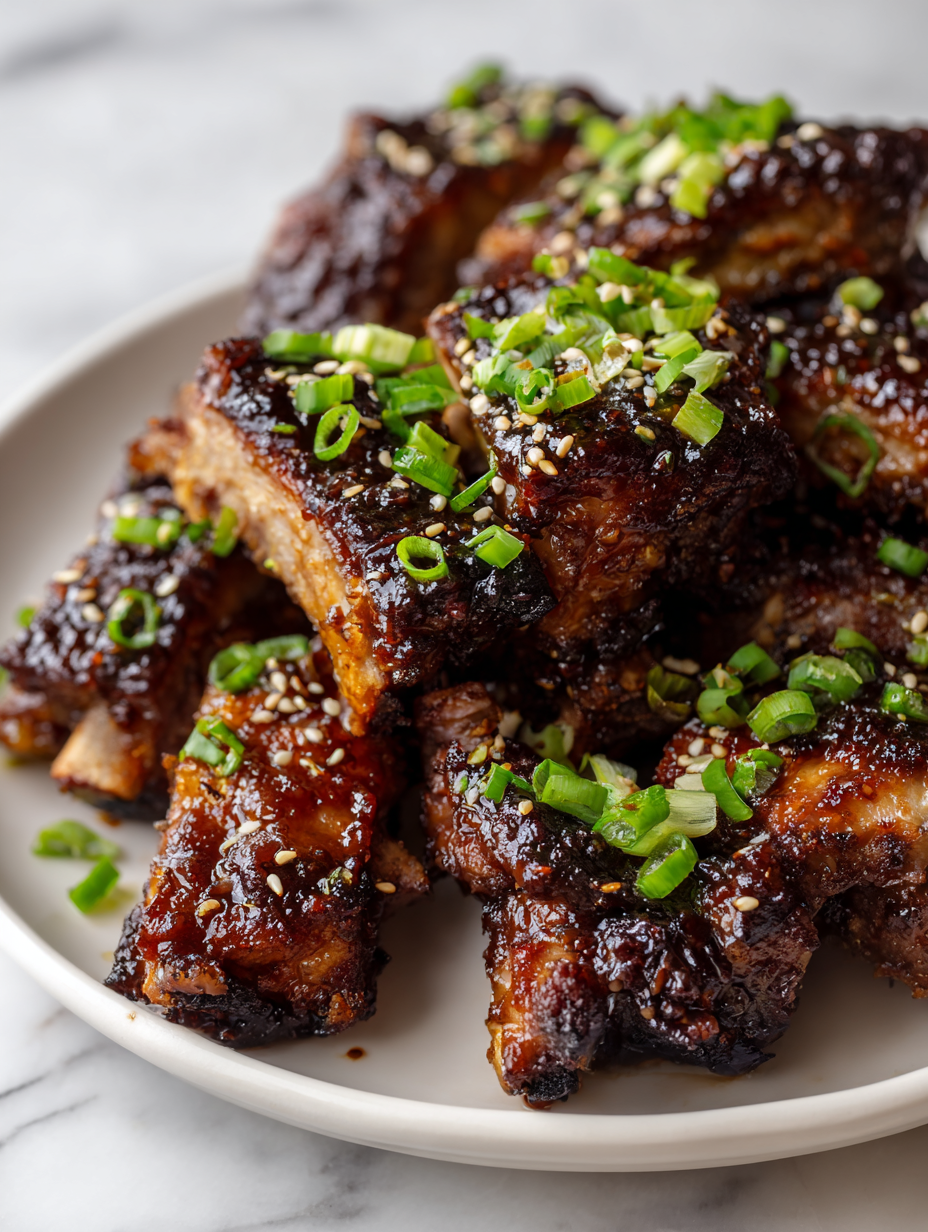
There’s something irresistibly tactile about a good sticky pork rib—those glossy, caramelized surfaces that catch the light and promise a burst of sweet, smoky goodness with each bite. I love how the glaze forms this sticky shell that clings to the meat, giving you that satisfying chew and a little crackle as you bite through. It’s a messy, glorious way to eat—perfect for lazy weekends or impromptu gatherings where everyone digs their fingers in.
What makes this recipe stand out for me is focusing on that glaze—how it transforms simple pork into something almost jewel-like on the plate. I’ve played around with different sweeteners and spices, but the goal is always that glossy, sticky finish that’s just barely charred and smoky. It’s a sensory journey—sight, smell, touch—in every bite, making it more than just a meal but a small celebration of textures and flavors.
Focusing on the sticky, caramelized glaze as a sensory journey—highlighting the tactile pleasure of each bite and the visual appeal of glossy, charred edges.
The joy of sticky, caramelized glaze
- I still remember the first time I got that glaze just right—crisp edges, a sticky sheen, and that sweet-smoky aroma filling the kitchen, it felt like magic.
- Cooking these ribs always takes me back to summer barbecues at my dad’s place, where the smell of caramelized sugar and smoky pork would drift through the yard, making everyone gather around.
- There’s a satisfaction in peeling back the charred, caramelized layer and discovering tender, fall-off-the-bone meat beneath—it’s a messy, joyous challenge every time.
- Honestly, the best part is how the sticky glaze clings to your fingers—each bite is a tactile, flavorful mess that makes you want to lick your fingers clean.
The story behind this recipe
- This recipe for sticky pork ribs came from a moment of frustration in my kitchen. I was experimenting with different glazes and wanted something that would really cling and caramelize, not just sit on the surface. One day, I finally nailed that perfect balance of sweet and smoky, with a gloss that looked almost too pretty to eat. It’s become a go-to for when I want a little celebration on a plate, no fuss needed.
- I love how these ribs turn into a tactile experience—each bite sticky, crispy, and tender all at once. It’s not just about the flavor, but about the joy of that glossy coating, the crackle of caramelized edges, and the delight of peeling back that sticky glaze with your fingers. They remind me that sometimes, simple ingredients combined with patience can create something unexpectedly special.
- heading: The joy of sticky, caramelized glaze
Trivia and Origins of Sticky Ribs
- Sticky pork ribs have roots in Asian barbecue traditions, where sugar and soy create glossy, flavorful coatings.
- The caramelization process dates back centuries, used to transform simple ingredients into rich, textured dishes.
- In some cultures, sticky ribs symbolize abundance and sharing, often served during festivals or family gatherings.
Ingredient breakdown: key components
- Pork ribs: I like using bone-in, they give more flavor and stay juicy. If you prefer leaner, try boneless but expect a different texture.
- Brown sugar: It’s the backbone of that sticky glaze—adds sweetness and caramelizes beautifully. Swap with honey for a more floral note, but reduce quantity.
- Soy sauce: Brings depth and umami—look for a good, dark soy. Gluten-free tamari works well if you’re avoiding wheat, but expect a slightly different saltiness.
- Garlic: Fresh garlic is best for that pungent, aromatic punch. Dried garlic powder can do in a pinch, but it won’t give you that fresh pop.
- Smoked paprika: Adds a subtle smoky warmth—use regular paprika if you don’t have it, but skip the smoky flavor altogether if you prefer a milder finish.
- Rice vinegar: Brightens the glaze with a tangy kick—apple cider vinegar is a nice swap, just cut back a little to avoid overpowering sweetness.
- Sesame oil: Just a splash adds nutty aroma and richness—if you don’t have it, toasted olive oil is a decent substitute, but skip the sesame if allergies are a concern.
Spotlight on key ingredients
Pork Ribs:
- I prefer bone-in for flavor and juiciness. The marrow and connective tissues melt into the meat, creating a rich, tender bite that’s hard to beat. If you go boneless, expect a slightly leaner, less juicy result, but still delicious.
- Brown sugar: It’s the backbone of that sticky glaze. It caramelizes beautifully, creating that glossy, crackly surface. Swap with honey if you want a floral, slightly different sweetness, but cut back a bit to prevent excess stickiness.
Garlic:
- Soy sauce: Adds depth and umami, giving the glaze a savory punch. Look for a dark, aged soy for richer flavor. If you need a gluten-free option, tamari works but may alter the saltiness slightly. It’s essential for that salty-sweet balance that makes the glaze addictive.
- Fresh garlic is key for sharp aroma and flavor. It releases a pungent, aromatic scent as it cooks, infusing the glaze with a savory punch. Dried garlic powder can be a quick substitute, but it won’t give you that vibrant, fresh aroma and slightly spicy bite.
Notes for ingredient swaps
- Pork Ribs: I prefer bone-in for flavor and juiciness. For a leaner option, try pork loin or tenderloin, but expect less richness.
- Brown Sugar: It’s essential for that caramelized sweetness. Honey can be used as a substitute for a floral, sticky glaze, but use less to avoid overly runny texture.
- Soy Sauce: Adds umami and depth. Tamari or coconut aminos work if you’re gluten-free, but they may alter the saltiness slightly.
- Garlic: Fresh garlic gives a pungent aroma and sharp flavor. Garlic powder can replace it in a pinch but won’t offer the same punch.
- Smoked Paprika: Imparts a smoky warmth. Regular paprika can be swapped, but the dish will lack that subtle smoky undertone.
- Rice Vinegar: Brightens the glaze with tang. Apple cider vinegar is a good alternative, just use a little less to keep balance.
- Sesame Oil: A splash adds nutty aroma and richness. Toasted olive oil can be a substitute, but skip sesame if allergies are a concern.
Equipment & Tools
- Baking sheet: To hold the ribs during baking.
- Aluminum foil: For easy cleanup and to help caramelize evenly.
- Basting brush: To apply the glaze smoothly and evenly.
- Sharp knife: To trim silver skin and cut ribs if needed.
Step-by-step guide to sticky ribs
- Gather your equipment: a large baking sheet, aluminum foil, a basting brush, and a sharp knife for trimming. Preheat your oven to 150°C (300°F).
- Prepare the ribs: remove the silver skin from the back if still attached. Cut into manageable sections if desired for even cooking.
- Mix your glaze: in a bowl, combine soy sauce, brown sugar, minced garlic, smoked paprika, rice vinegar, and a splash of sesame oil. Stir until smooth.
- Lay the ribs out on the baking sheet lined with foil, bone side down. Brush generously with the glaze, ensuring all surfaces are coated.
- Bake uncovered for 2.5 to 3 hours. Every 30 minutes, baste with more glaze and turn the ribs to promote even caramelization.
- Check the ribs: they should be tender and the glaze thick and sticky. The edges might start to char lightly—that’s good. If they look too dark, tent with foil.
- Increase oven to 220°C (430°F) or broil setting for the final 10 minutes. Watch carefully to develop a deep, glossy, caramelized crust.
- Remove from oven and let rest for 5 minutes. The glaze will firm up slightly. Serve hot, with extra glaze on the side if desired.
- Plate the ribs: cut into individual portions or serve whole. Encourage diners to get their fingers sticky for that full experience.
- Enjoy the crackle of caramelized edges and the tender, juicy meat coated in that irresistible sticky glaze.
Let the ribs rest for 5 minutes after baking. Then, slice or serve whole. Encourage diners to lick their fingers and enjoy the sticky, smoky goodness.
How to Know It’s Done
- Glaze is deep amber and sticky, with a crackly surface.
- Ribs are tender and easily pulled apart with a gentle tug.
- Edges have a light char, but not burnt—look for a glossy, caramelized crust.
Sticky Pork Ribs
Ingredients
Equipment
Method
- Preheat your oven to 150°C (300°F). Line a baking sheet with aluminum foil for easy cleanup.
- Use a sharp knife to remove the silver skin from the back of the pork ribs, then cut the racks into smaller, manageable sections if desired.
- In a bowl, whisk together soy sauce, brown sugar, minced garlic, smoked paprika, rice vinegar, and sesame oil until the sugar dissolves and the mixture is smooth.
- Place the ribs on the prepared baking sheet, bone side down. Use a basting brush to coat all sides generously with the glaze, ensuring the meat and surface are well covered.
- Bake the ribs uncovered for about 2.5 to 3 hours, turning and basting with more glaze every 30 minutes. The meat should become tender and the glaze will begin to thicken and cling to the surface.
- Once the ribs are tender and the glaze is sticky and glossy, increase the oven temperature to 220°C (430°F) or switch to the broil setting. Brush the ribs with additional glaze and broil for 8–10 minutes, watching carefully for caramelization and light charring.
- Remove the ribs from the oven and let them rest for 5 minutes, allowing the glaze to set and the juices to redistribute.
- Slice the ribs into individual portions or serve whole, with extra glaze on the side for dipping. The glossy, caramelized surface should crackle slightly with each bite, revealing tender, juicy meat inside.
- Enjoy the sticky, smoky, and tender pork ribs, savoring the tactile contrast of the crispy edges and juicy interior.
Pro tips for perfect sticky ribs
- Use a basting brush to apply the glaze evenly, creating a glossy, crackly surface.
- Keep an eye on the oven during broiling; the glaze can go from perfect to burnt in seconds.
- For extra caramelization, brush the ribs with glaze multiple times during the final bake, building layers of sticky goodness.
- Rest the ribs for at least 5 minutes after baking; this helps the glaze set and makes slicing easier.
- If the glaze starts to burn, tent the ribs with foil and lower the oven temperature slightly to prevent charring.
- To enhance smokiness, add a dash of smoked paprika before baking—your senses will thank you.
- For an extra sticky finish, sprinkle a tiny bit of extra brown sugar on the ribs before the final high-heat blast.
Common mistakes and how to fix them
- FORGOT to remove silver skin → Trim thoroughly before cooking for better texture.
- DUMPED glaze too early → Baste repeatedly for a sticky, even coating.
- OVER-TORCHED edges → Cover with foil if edges darken too quickly.
- MISSED final resting → Let ribs rest 5 minutes for juices to settle.
Quick Fixes and Pantry Swaps
- When glaze shimmers without sticking, splash a little water and re-baste for shine.
- If ribs are dry, cover with foil and gently steam for 5 minutes to rehydrate.
- DUMPED sauce too thin? Simmer it over low heat until thickened and glossy again.
- When edges burn, shield with foil immediately and reduce oven temp to prevent further charring.
- Splash a pinch of baking soda into the glaze if it’s too salty—just a tiny pinch and stir well.
Prep, store, and reheat tips
- You can prep the ribs a day ahead by trimming and marinating them in the glaze. Keep covered in the fridge for up to 24 hours. The glaze will deepen in flavor, making the final caramelization even richer.
- Store cooked ribs in an airtight container in the fridge for up to 3 days. The glaze may firm up, but gentle reheating will revive that sticky, glossy finish.
- Reheat in a low oven (around 150°C/300°F) covered with foil for about 20 minutes. Baste occasionally to refresh the glaze, and increase heat briefly at the end to crisp the edges again.
- For longer storage, freeze cooked ribs for up to 2 months. Thaw overnight in the fridge, then reheat slowly to prevent drying out. Expect a slightly softer texture but still intensely flavorful.
Top questions about sticky pork ribs
1. How do I choose the best pork ribs?
Look for ribs with good marbling and a fresh, meaty smell. The meat should be firm but springy, not slimy or overly wet.
2. Should I rinse or soak the ribs before cooking?
Soak the ribs in cold water and pat dry before cooking to remove excess salt or blood. This keeps the glaze sticking well.
3. What’s the best way to cook pork ribs for sticky glaze?
Bake or slow cook the ribs at low temp (around 150°C/300°F) until tender, then broil for that sticky, caramelized finish.
4. When should I add the glaze?
Apply the glaze during the last 30 minutes of baking, then broil high for 10 minutes to get that glossy, charred look.
5. How do I get an even sticky glaze?
Use a basting brush for even coating and turn the ribs occasionally during baking for consistent caramelization.
6. What if my glaze burns or becomes too dark?
If the glaze gets too dark or starts to burn, tent the ribs with foil and lower the oven temperature slightly.
7. How long should I let the ribs rest?
Rest the ribs for 5 minutes after baking. This lets the juices settle and keeps the glaze sticky and flavorful.
8. How do I store and reheat leftover sticky ribs?
Store leftovers in an airtight container in the fridge for up to 3 days. Reheat slowly to keep them juicy and sticky.
9. How do I get that extra crispy, caramelized top?
For an extra caramelized crust, broil the ribs on high for the last 10 minutes, keeping a close eye to prevent burning.
10. How can I fix dry or tough ribs?
If the ribs are too dry, cover with foil and steam gently for a few minutes, or brush with extra glaze before reheating.
There’s something deeply satisfying about the tactile pleasure of ripping into a sticky, caramelized pork rib—those glossy edges with a smoky, sweet aroma that lingers. It’s a dish that invites messy fingers and shared smiles, perfect for casual gatherings or quiet weekends at home. In a way, it’s almost meditative—the slow caramelization, the crackle, the tender meat—each step reinforcing the joy of simple, honest cooking.
And honestly, once you get that glaze just right, it’s hard not to keep reaching for another piece. It’s about those moments of sensory delight—sight, smell, touch—all coming together in a little celebration of flavors and textures. Sometimes, good food isn’t about complexity, but about the honest, unpretentious pleasure of a well-cooked, sticky pork rib.

Hi, I’m Emily Carter, the founder of Absolute Chaos Mode. Born and raised in Portland, Oregon, I grew up in a household where dinner was equal parts delicious and unpredictable