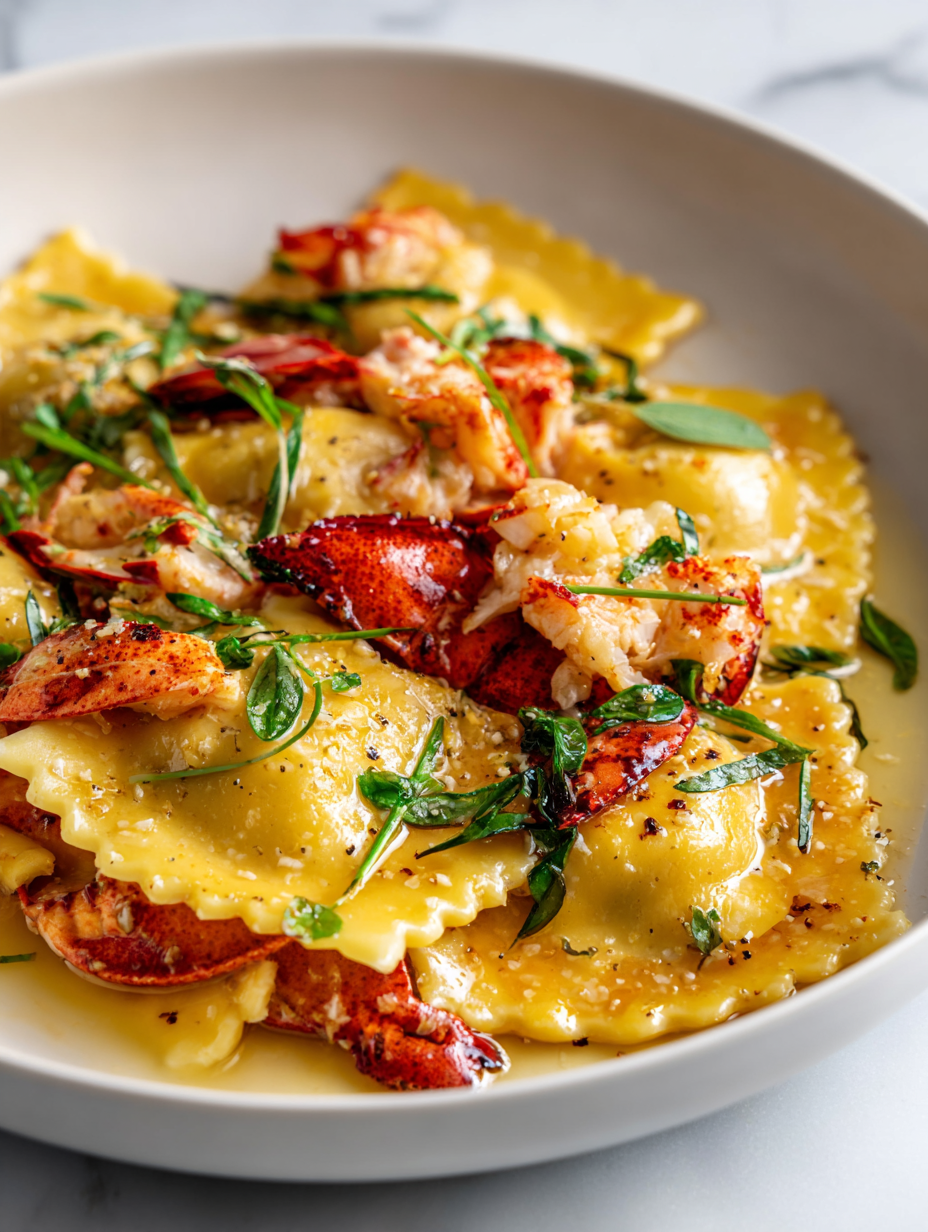
Ingredients
Equipment
Method
- Start by cooking the lobster: bring a large pot of salted water to a gentle simmer. Add the lobster and cook for about 8-10 minutes until the shell turns bright red and the flesh is opaque. Remove, let cool slightly, then chop finely or pulse in a food processor for a finer filling.
- Make the pasta dough: on a clean surface, mound the flour and create a well in the center. Crack the eggs into the well, sprinkle with a pinch of salt, and gradually mix with a fork, then knead by hand for about 8-10 minutes until smooth and elastic. Wrap in plastic and let rest for 30 minutes to relax the gluten.
- Prepare the filling: in a bowl, combine the chopped lobster, lemon zest, white wine, melted butter, and chopped herbs. Mix well until evenly incorporated. Taste and adjust seasonings if needed.
- Divide the rested dough into four portions. Using a pasta machine or rolling pin, roll each portion into a thin sheet (~1 mm thickness). Keep the sheets covered with a damp towel to prevent drying out.
- Place small spoonfuls of lobster filling every 2 inches along one sheet. Lightly brush around each with beaten egg to help sealing. Carefully lay a second sheet over the filling, pressing gently to remove air and seal around each mound. Cut into individual ravioli using a fluted cutter or knife.
- Bring a large pot of salted water to a gentle simmer. Carefully drop the ravioli into the water and cook for 3-4 minutes until they float and are tender. Use a slotted spoon to transfer them to a warm plate.
- In a skillet, melt a small amount of butter over medium heat. Gently toss the cooked ravioli in the butter for about 30 seconds until heated through and slightly shiny. Serve immediately, garnished with extra herbs and a squeeze of lemon for brightness.
Notes
Resting the dough before rolling makes it easier to handle. Sealing the edges thoroughly prevents leaks during cooking. Using fresh lobster yields the best flavor and texture. For an extra touch, drizzle with a little lemon-infused olive oil before serving.