
Making a Caprese Salad means dealing with the mess of slicing tomatoes and tearing basil—no sleek presentation here, just the real, tactile work of prepping each component. You’ll feel the juice squish out and the basil leaves crackle under your fingers.
Assembling it is quick, but be ready for the smear of olive oil and the splash of balsamic that soak into the cheese and tomato, creating a little puddle on the plate. It’s all about the tactile contrast—soft cheese, juicy tomatoes, and tender basil.
the gentle squish of ripe tomatoes as you press them, releasing juice that mixes with the fresh basil and melts into the mozzarella.
What goes into this dish
- Fresh mozzarella: I prefer the soft, milky kind, which melts slightly when you toss it with the warm tomato juices. Skip the rubbery pre-sliced stuff for this; it makes all the difference in creaminess.
- Tomatoes: Ripe, in-season heirlooms are best, bursting with juice and flavor. If you only have underripe or mealy ones, the salad feels flat—seek out local, ripe fruit, and let them sit out a bit if needed.
- Fresh basil: Nothing beats fragrant, bright basil leaves—tear them just before assembling to release their aroma. Dried basil is a poor substitute here; it misses that punch of herbal freshness.
- Olive oil: Use good-quality extra virgin, ideally cold-pressed. It adds a grassy, peppery note that balances the acidity of the tomatoes. Skip the cheap stuff; it dulls the whole dish.
- Balsamic vinegar: A drizzle of aged balsamic adds a sweet-tart complexity, but a balsamic glaze can be too sticky and overpowering. Use sparingly, and look for a bright, slightly tangy version.
- Salt & pepper: Don’t skimp—crystal sea salt and freshly cracked black pepper make the flavors pop. Too much salt can drown the delicate cheese, so add gradually.
- Optional: A few drops of lemon juice or a sprinkle of flaky sea salt just before serving can brighten flavors and add a subtle crunch.
Common mistakes and how to fix them
- FORGOT to chill mozzarella before slicing? Fix by refrigerating for 30 minutes to keep it firm.
- DUMPED too much balsamic? Use sparingly, just a drizzle to avoid overpowering the delicate flavors.
- OVER-TORCHED the basil? Add it at the last second to preserve aroma and bright green color.
- SKIPPED seasoning altogether? Salt and pepper are essential—season each component for balanced taste.
Make-Ahead and Storage Tips
- Tomatoes can be sliced and kept in the fridge for up to 2 hours; they’ll lose some juiciness but stay fresh.
- Mozzarella can be sliced a few hours ahead; keep it covered in the fridge to prevent drying out.
- Basil leaves are best torn just before assembly; if prepping early, store whole leaves wrapped in a damp paper towel in the fridge for up to a day.
- Assembled salads are best eaten within 1 hour; the basil and cheese start to release moisture after that, making everything soggy.
- If storing leftovers, keep the components separate and assemble just before serving; the flavors are sharper and fresher that way.
- Refrigerate prepared ingredients in airtight containers; flavors mellow and some of the tomato’s brightness can fade after 24 hours.
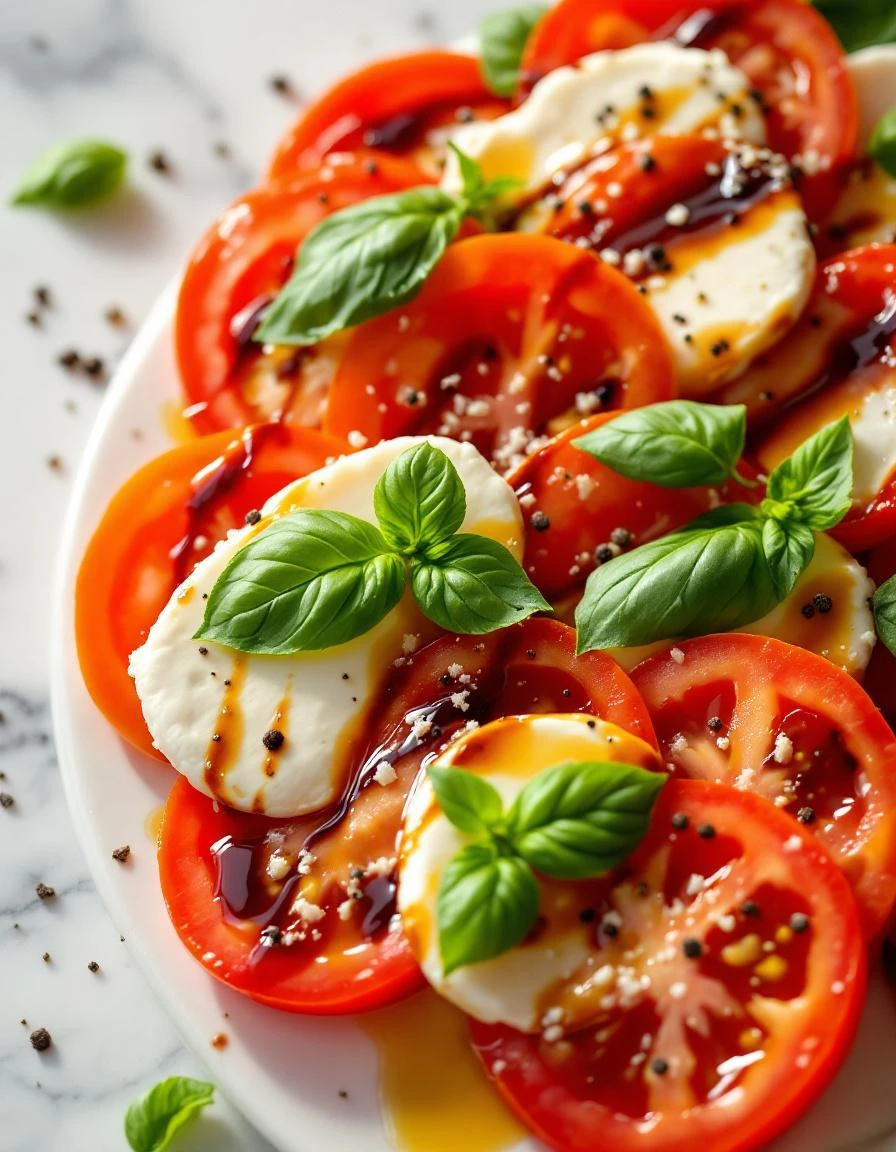
Classic Caprese Salad
Ingredients
Equipment
Method
- Slice the fresh mozzarella into thick, even rounds using a sharp knife, and set aside.
- Core and slice the ripe tomatoes into similar thick rounds, keeping the slices uniform for easy layering.
- Gently tear the basil leaves with your fingers to release their aromatic oils and set aside.
- Arrange the tomato and mozzarella slices on a serving platter in an alternating pattern, slightly overlapping for visual appeal.
- Tuck the basil leaves in between the tomato and cheese layers or scatter them on top for a fresh burst of aroma.
- Drizzle the olive oil evenly over the assembled salad, allowing it to seep into the layers for richness.
- Sprinkle a few drops of balsamic vinegar over the top, adding a tangy sweetness that complements the flavors.
- Season the salad generously with salt and freshly cracked black pepper to taste, enhancing all the delicate flavors.
- Allow the salad to sit for a few minutes to let the flavors meld and the juices to mingle before serving.
Notes
FAQs
1. How do I pick good tomatoes?
Use ripe, fragrant tomatoes that yield slightly when pressed, releasing a burst of juice with a squish. If they’re underripe, the salad feels dull and flat.
2. How should fresh mozzarella feel?
Fresh mozzarella should be soft, milky, and slightly moist. Let it sit out for a bit before slicing to prevent it from tearing and feeling rubbery.
3. When should I add basil?
Tearing basil leaves releases their aroma and keeps them from browning. Tear just before assembling to preserve that bright, herbal scent.
4. What oil works best?
A drizzle of good-quality extra virgin olive oil adds grassy, peppery notes. Use sparingly to let the tomatoes and cheese shine, avoiding dullness.
5. How much balsamic should I use?
A splash of aged balsamic vinegar adds a tangy sweetness. Drizzle lightly; too much can overpower the delicate balance of flavors.

Hi, I’m Emily Carter, the founder of Absolute Chaos Mode. Born and raised in Portland, Oregon, I grew up in a household where dinner was equal parts delicious and unpredictable